Conflict Arises: Who Owns the Water Rights?
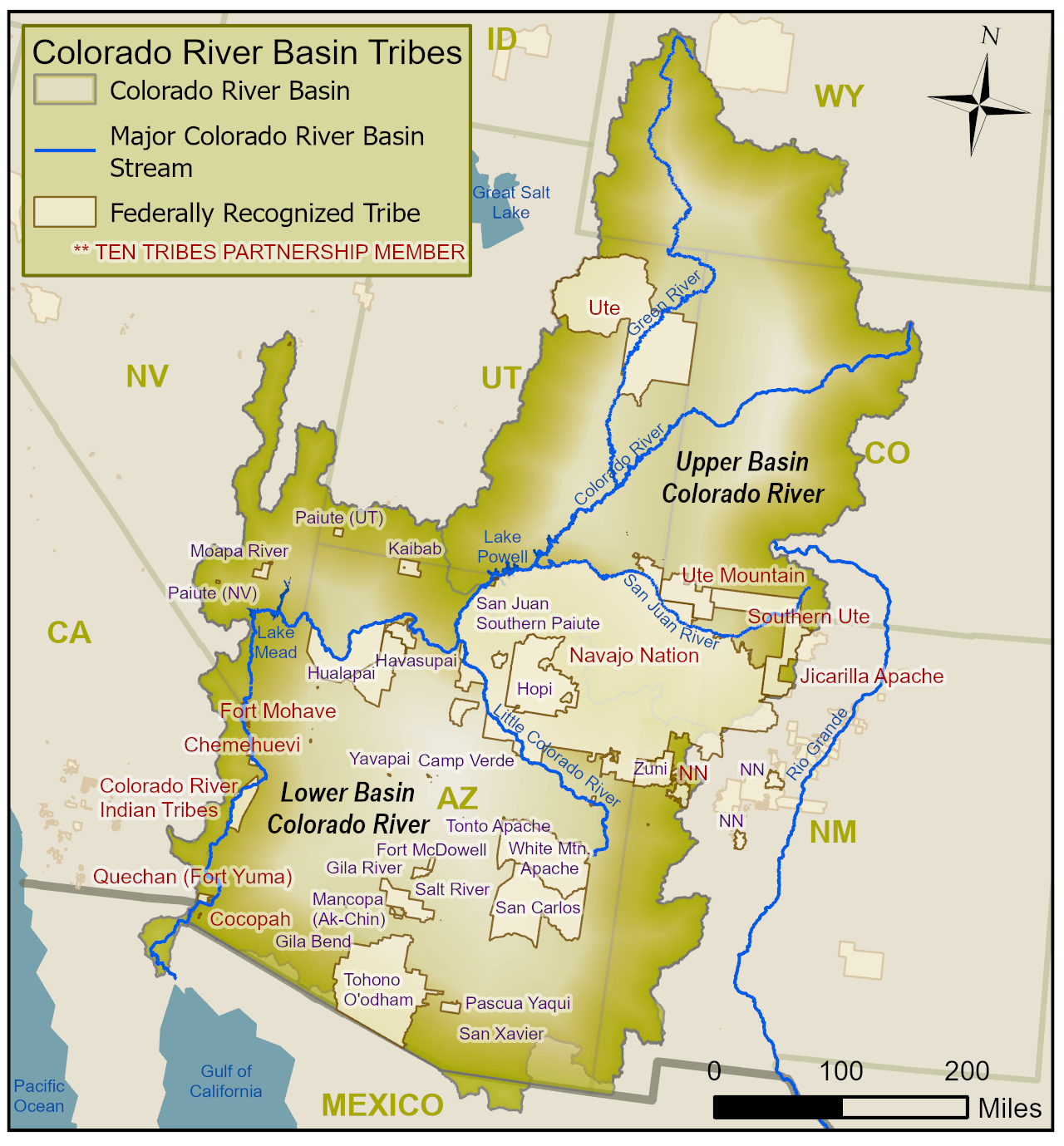
Long has the great Colorado River been the lifeline of the American Southwest. At its peak it supply’s water to more than 40 million people across seven different states. Amongst those it supplies are at least 30 different Native American tribes and vital farmland.
In recent years, the river has remained at record low levels leading to our current conflict over who should be the recipients of the dwindling supply.
However, beneath the conflict for resources, there lies a much deeper narrative: one of tribal exclusion, sovereignty, and a broken promise.
The Winters Doctrine: Native Water Rights
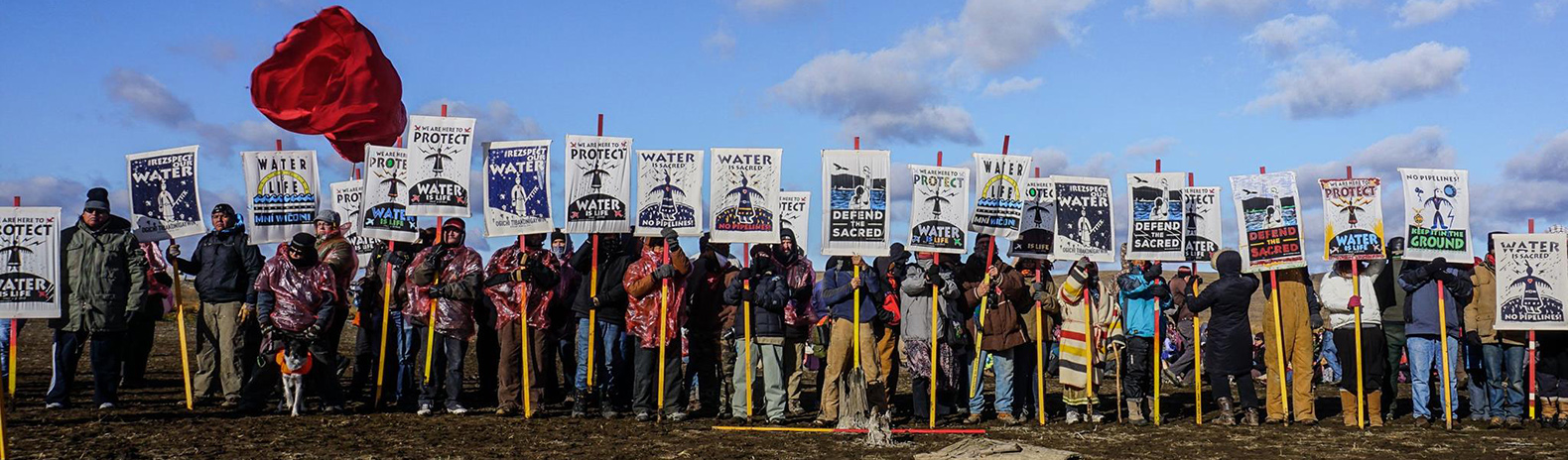
In 1908, a Supreme Court case, Winters v. United States, ruled that Native American reservations have reserved water rights and storage so as to protect and support their communities.
While in theory this seemed like an early win for Native Americans, in actuality it was never enforced or respected. Tribal reservations often received bare bones access to water, while non-Native Americans received as much as they needed.
Washington passed its first water law in 1917, yet still fails to recognize the oldest water rights belong to the tribes who have made productive use of our waterways since time immemorial.
– The Center for Environmental Law and Policy
Dividing The River: The Colorado River Compact
In 1922, seven U.S. states, along with the federal government, signed the Colorado River Compact. This divided the river basin into two distinct parts: the Upper Basin and the Lower Basin.
It is important to note that neither Mexico nor indigenous Native American tribes had any input in this decision, despite being directly affected by it.
The Winter’s Doctrine was entirely ignored during this division of boundaries. For decades following this decision, reservations had no legal say about their own water rights and needs.
The Navajo’s Fight For Water
In a recent Supreme Court Case, Arizona v. Navajo Nation, the Supreme Court held that the federal government is not obligated to secure water access rights for the Navajo Nation, despite previous treaties that guaranteed just that.
Many tribal reservations, the Navajo included, within the Colorado River basin are then forced to struggle and fight for access to water. Many communities have aging and derelict piping systems, if they have any at all. On top of that, many do not have functional water treatment plants, meaning that even if they do have access to water it isn’t necessarily clean. As a result, many families must drive miles and miles to access clean water tanks, which then leaves them with the logistical burden of transporting that water back to their families.

References
Navajo Nation Water Rights Commission. “Tribal Water Rights Overview.” NNWRC, nnwrc.navajo-nsn.gov/Public-Education/Tribal-Water-Rights-Overview.
Center for Environmental Law & Policy. “Water Law & Tribal Rights.” CELP, celp.org/water-law-tribal-rights/.
Robert Wood Johnson Foundation. “Bringing Water to the Navajo Nation.” RWJF, 12 May 2021, www.rwjf.org/en/insights/blog/2021/05/bringing-water-to-the-navajo-nation.html