
A Toxic Legacy
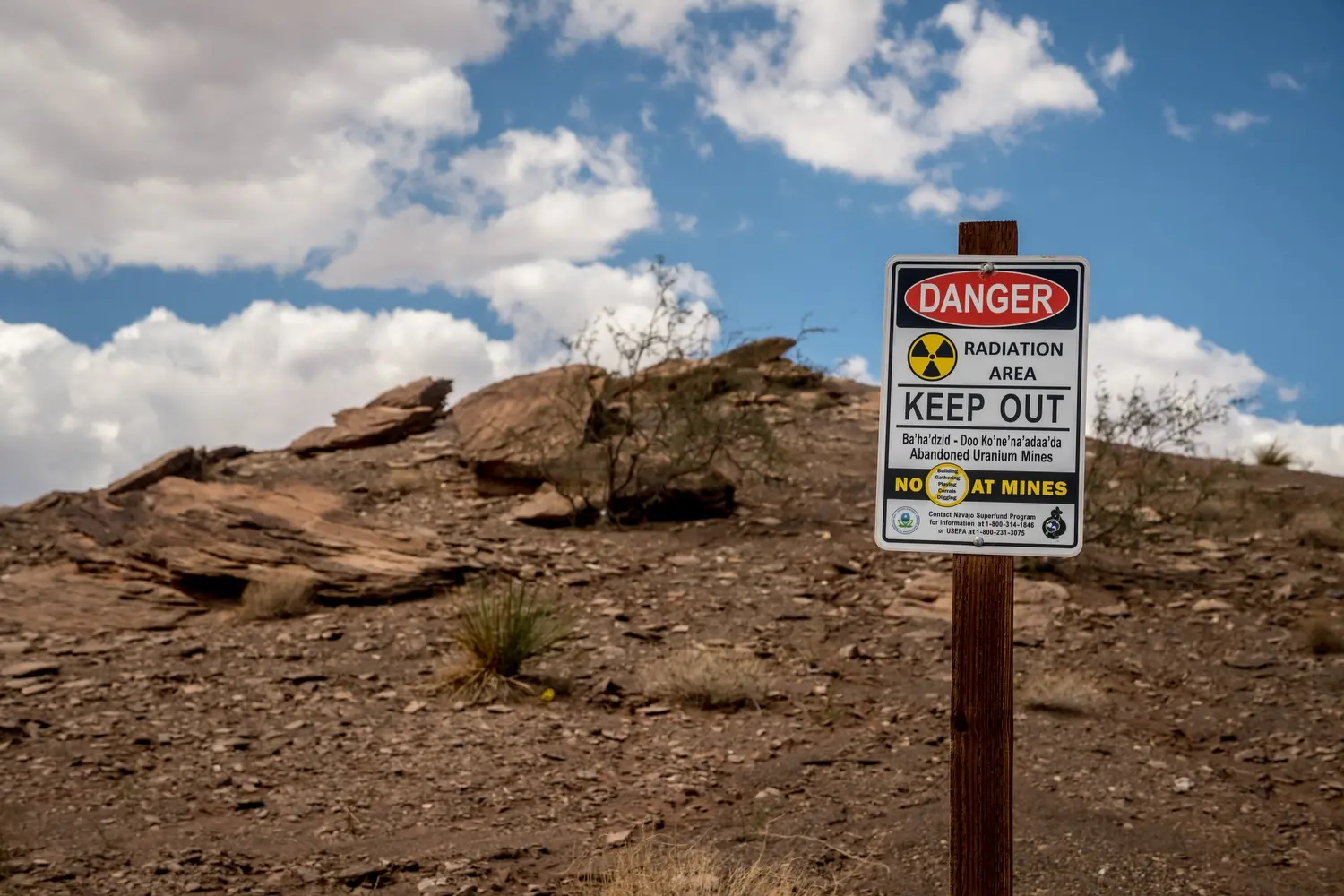
During the end of WWII and throughout the Cold War, the U.S. Atomic Energy Commission sought uranium ore for use in nuclear weapons and prototype reactors.
The lands belonging to the Navajo Nation were extremely rich in uranium ore, and so it became a primary location for extraction. Primary mining began in the 1940’s and lasted until the 1980’s, during this time over 30 million tons of uranium ore were mined from the Navajo Nation lands.
During this time period many local Navajo’s were employed for mining operations as they were promised “good” jobs. They were never properly warned on the dangers of mining uranium ore nor the radiation hazard present. Uranium mining produces a large amount of radioactive dust and many miners did not have the proper safety equipment to mine safely.
“The bosses never told us uranium was dangerous. We didn’t find out until men started getting sick.”
-Former Navajo uranium miner, quoted in Brugge & Goble (2002)
The Church Rock Disaster
After the uranium ore has been mined, it must be processed for conventional use. This process is known as milling and it has a nasty byproduct: uranium tailings. These tailings are waste material and must be disposed of properly and securely, as they are still highly radioactive.
On July 16, 1979, the United Nuclear Corporation’s uranium tailing dam near Church Rock, NM collapsed releasing contaminated material into the surrounding areas and the into the Rio Puerco, a tributary of the Rio Grande.
Over 94 million gallons of radioactive waste was released during the dam collapse. In addition to that, over 1,100 tons of radioactive uranium tailings were also released.
Despite the severity of the spill, media coverage was severely lacking. The Navajo received almost no federal emergency aide for the incident. This marked the start for many residents to question the environmental impact left over from the uranium mines and mills.
Lasting Health Concerns And Environmental Damage
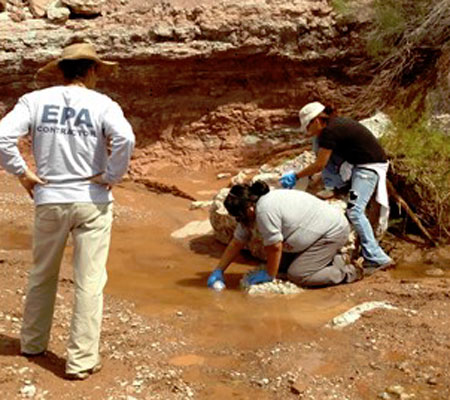
Radiation exposure from the mines, contamination in the drinking water, and livestock contamination has caused an unknowable amount of sickness and illness for the residents of the Navajo Nation.
Residents suffered from increased levels of lung cancer, kidney disease, various autoimmune disorders, birth defects, and other reproductive health issues.
“Radiation is something you cannot see, smell, or taste, but it is killing our people slowly.”
-Navajo Nation President Jonathan Naz
Many residents relied upon well water for drinking, bathing, and cleaning. Analysis from the EPA confirmed that many wells, specifically those located within close proximity to mines, contained high levels of arsenic, radium, uranium, and other toxic heavy metals. They exceeded federal water regulations for contamination by a wide margin.
Many livestock, which are usually allowed to roam free within the Navajo Nation, had become highly contaminated. Many families were forced to slaughter entire herds to prevent the spread and consumption of contamination.
A $1 billion clean up plan has been drawn up by joint Federal agencies, however, actual implementation of the plan has been slow to non-existent. Clean-up is still estimated to take decades to complete as the EPA has determined that there are over 4000 contaminated sights in need of cleanup.
References:
Brugge, Doug, and Rob Goble. “The History of Uranium Mining and the Navajo People.” Environmental Health Perspectives, vol. 110, no. 1, 2002, pp. 119–128.
Wittenberg, Ariel. “A Toxic Legacy from Uranium Mines, the Navajo Nation Confronts Interior Nominee Deb Haaland.” Pulitzer Center, 19 Feb. 2021, pulitzercenter.org/stories/toxic-legacy-uranium-mines-navajo-nation-confronts-interior-nominee-deb-haaland.
Ichniowski, Tom. “Abandoned Uranium Mines in Arizona Assessed for Remediation.” Engineering News-Record, 11 July 2018, www.enr.com/articles/44813-abandoned-uranium-mines-in-arizona-assessed-for-remediation
United States Environmental Protection Agency. “Abandoned Uranium Mines Cleanup.” EPA, www.epa.gov/navajo-nation-uranium-cleanup/aum-cleanup